
Summary. Every padel court shares the 20×10 m playing rectangle, but tournament-grade and club-grade differ in enclosure height, clearance, and net details that decide whether you can host sanctioned play. Choose the tier by your event ambition, not by the initial saving — at Rayjun we quote both tiers as labeled options so the trade-off is visible before you buy.
The Official Dimensions, and What "Official" Actually Covers
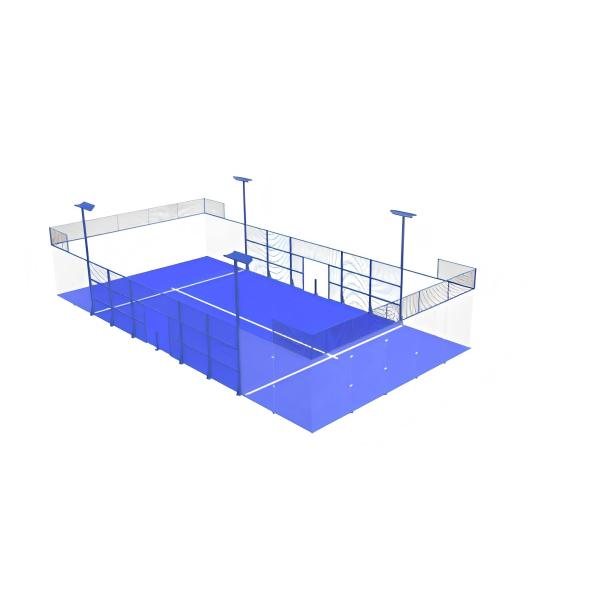
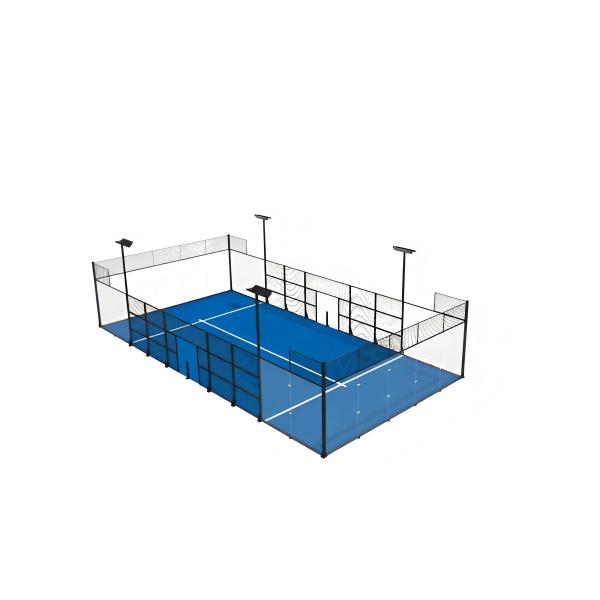
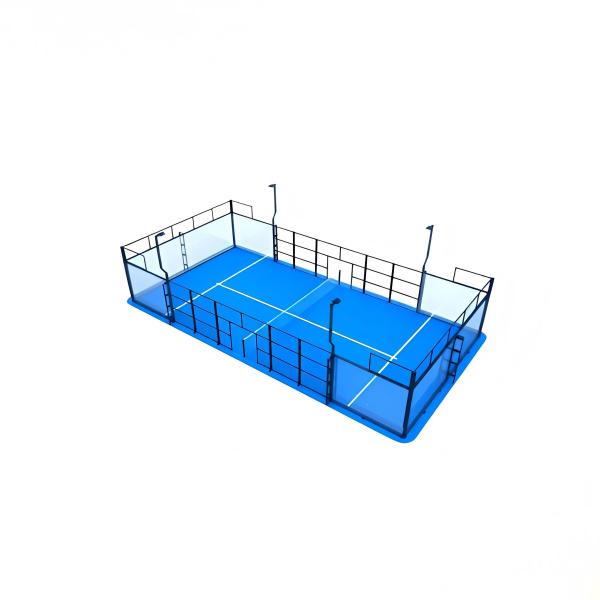
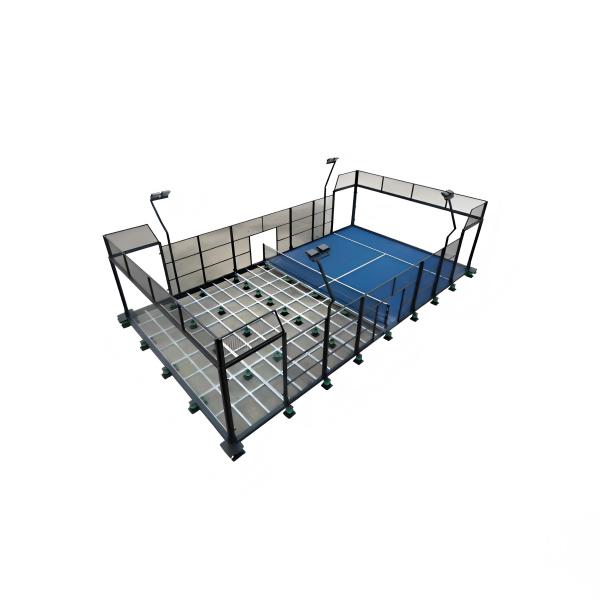
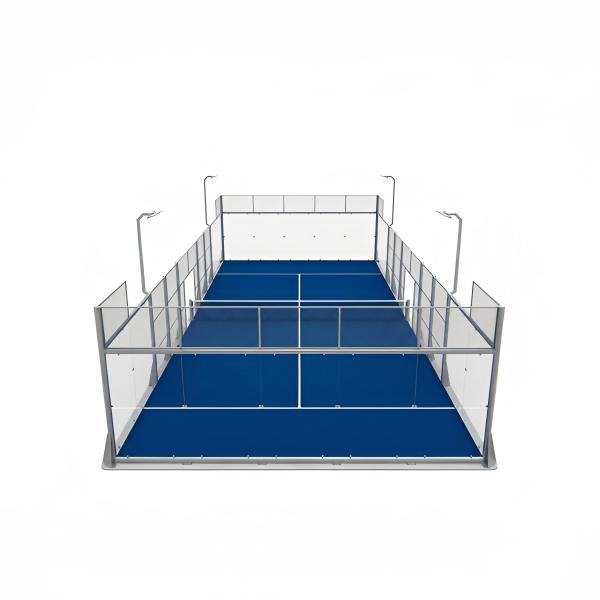
The 20 m × 10 m playing area is the one number everyone agrees on, set by the international padel federation and followed by national bodies. What "official" adds beyond the rectangle is the enclosure: side walls at least 3 m high, end walls at least 4 m high, and a clear run-off around the court so players and balls do not hit hard surfaces. Lighting and surface are part of the playing experience but are specified separately, and we cover court flooring options and LED lighting in their own guides. The dimension that catches buyers out is the run-off: a tight backyard build can meet the 20×10 m rectangle but fail the clearance rule, which blocks sanctioned use even when the game itself feels normal.
Tournament-Grade vs Club-Grade: Which One Should You Buy?
| Element | Club-grade | Tournament-grade |
| Playing area | 20 ×10 m | 20 ×10 m |
| Side wall height | 3 m, acceptable | 3 m minimum, verified |
| End wall height | 3 m common | 4 m required |
| Run-off or clearance | As space allows | Minimum clearance enforced |
| Net height | 0.88 m at center | 0.88 m center, 0.92 m at posts, checked |
| Enclosure glass | Standard tempered | Certified, impact-rated |
| Typical use | Leisure, rental, teaching | Ranked and federated events |
The table is not about the game feeling better at one tier; it is about whether an inspector will pass the court for a sanctioned match. Club-grade is perfectly good for paying members who simply want a game, and most operators never feel the difference in daily play.
When Club-Grade Is the Right Call
Club-grade makes sense when the court is for member play, coaching, or short-stay rental where no one is checking a federation certificate. A hotel that adds a single court as a guest perk, a residential compound, or a teaching academy with limited space all fit here, because the lower enclosure and tighter run-off save land and cost without hurting the experience. If your only KPI is hours booked per week, club-grade is the rational spec, and the money saved is better spent on surfacing or lighting that players notice every session.
When You Should Specify Tournament-Grade
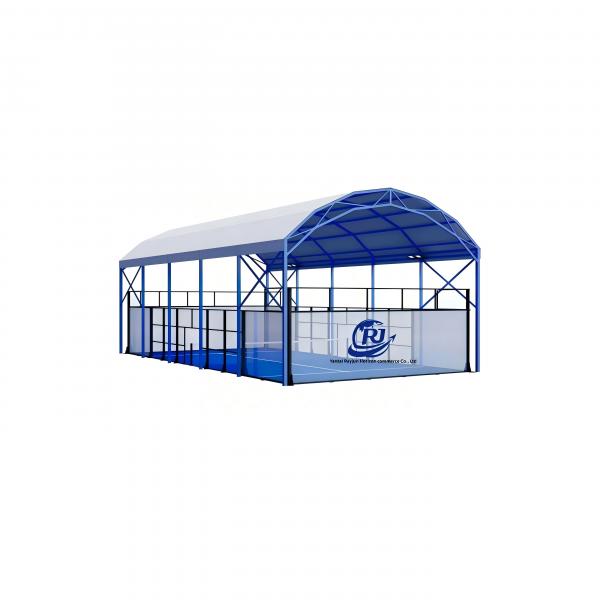
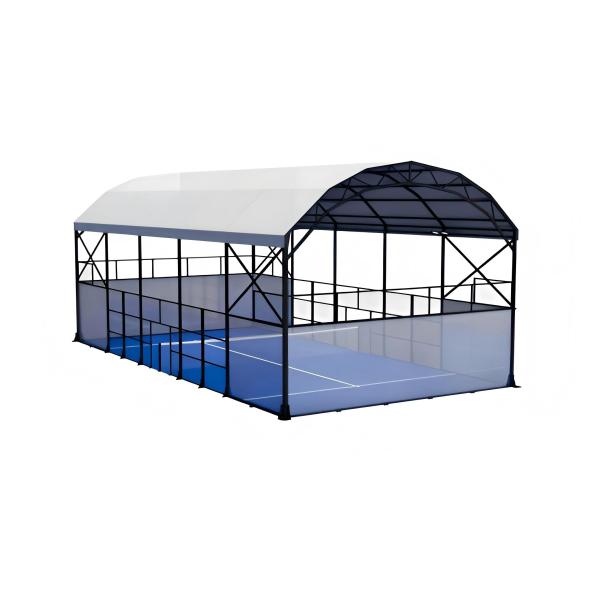
Specify tournament-grade if you plan to host league matches, club championships, or any event where a federation official may attend. The extra end-wall height and enforced clearance are expensive to add later, because they change the foundation footprint and the glass panel sizes, not just a bolt-on extra. A sports club that wants to attract tournaments for revenue should treat tournament-grade as the entry requirement, not an upgrade. Our super panoramic model is built for exactly this visibility-and-compliance scenario, with the taller enclosure and wider sightlines that officials and spectators expect.
How the Clearance Rule Protects Players and Your Liability
The run-off is not bureaucracy for its own sake. A court built tight to a wall or a fence leaves players nowhere to recover from a sprint, and a stray ball that clears the enclosure can hit a passer-by or a car. Operators who skip the clearance to fit a smaller plot take on that liability themselves, and insurers ask about it after an incident rather than before. The enforced clearance in tournament-grade is simply the version of the rule that has been tested at scale, but the safety logic applies to every court you open to the public regardless of tier.
Do You Need Tournament-Grade If You Only Rent by the Hour?
If your entire model is hourly or daily rental to casual players, club-grade is normally enough, because no one is checking a federation certificate to book a game. The moment you add league nights, inter-club friendlies, or any ranked fixture to the calendar, the question changes, and those programs are exactly what turn a cost center into a revenue driver for many clubs. A practical middle path is to build club-grade now but keep the foundation and footprint tournament-ready, so the upgrade later is a panel and glass change rather than a rebuild. At Rayjun we flag this option on the drawing when the site allows it, so you are not locked into the cheaper tier by default.
Failure Risks of Mixing the Two
The risk is not that club-grade plays badly; it is that a club-grade court cannot be quietly promoted to tournament use. An operator who books a ranked match on a non-compliant court faces cancellation, refunds, and reputational damage, and the resale value of a non-compliant court is lower because the next buyer may hit the same limitation. The net system also has to meet the post-height and tension rule, which a casual build sometimes skips, so the gap can sit in more than one component at once.
What to Specify in Your Order
Put the tier on the order as explicit lines rather than a single vague label:
- Playing area confirmed at 20 × 10 m.
- Enclosure height per intended tier (3 m sides, 4 m ends for tournament).
- Minimum run-off or clearance around the court.
- Net specification: 0.88 m at center, 0.92 m at posts.
- Glass certification level required.
- Any federation or local authority the court must satisfy.
If the supplier only quotes "standard padel court" with no tier, ask which rules it meets before you commit, because the absence of a tier almost always means the cheaper one.
How Rayjun Supplies Both Tiers
At Rayjun we manufacture to the 20×10 m footprint as the base and then build the enclosure and clearance to the tier you choose, so you are not paying for tournament compliance you do not need and are not missing it if you do. We confirm the wall heights and run-off in the shop drawing and label the tier on the quotation, and we can supply the full product range from club-grade panoramic to tournament-ready super panoramic. Tell us your event plan and we will spec the right one instead of nudging you toward the most expensive build by default.
FAQ
Q: Can I start with club-grade and upgrade to tournament-grade later? A: You can only upgrade if the original foundation and footprint already allow the taller enclosure and wider run-off, which most tight builds do not. If there is any chance you will host ranked play, specify tournament-grade at purchase rather than hoping to convert it afterward.
Q: Does tournament-grade need more land than club-grade? A: Yes, because the enforced clearance around the court adds to the total footprint beyond the 20×10 m rectangle. Measure the run-off requirement on your site before you commit to a location, or you may find the land fits the game but not the certification.
Q: Will a club-grade court still feel good to play on? A: For casual and member play it feels the same, because the playing area and net are identical; the difference is in compliance, not in day-to-day enjoyment. Most leisure operators never notice the gap during normal sessions.
Q: Do I need federation certification to open a paying court? A: No, you can run a commercial leisure court without federation certification, as long as you meet local building and safety rules. Certification only matters when you want to host sanctioned competitive events that an outside body may inspect.
Q: How do I tell which tier a supplier's "standard" court meets? A: Ask for the enclosure heights, run-off, and net spec in writing and compare them to the tournament table above; if the numbers are missing, the court is almost certainly club-grade. Request the tier label on the quotation so there is no ambiguity about what you are buying.
Talk to Rayjun About the Right Certification Tier
If you are deciding between a leisure court and a tournament-ready venue, email andrew@rayjunhorizon.com with your site size and event plan, and the Rayjun team will spec the correct enclosure tier so you do not overbuild or get locked out of hosting matches later.